
" width="24.84921383404711px"><path d="M 0 6.687 C 0 2.994 2.994 0 6.687 0 C 10.38 0 13.374 2.994 13.374 6.687 C 13.374 10.38 10.38 13.374 6.687 13.374 C 2.994 13.374 0 10.38 0 6.687 Z" fill="transparent" height="13.374375782687338px" id="e5ml6WSPl" stroke-dasharray="" stroke-linecap="butt" stroke-linejoin="miter" stroke-miterlimit="10" stroke-width="3.71" stroke="rgba(58, 158, 163, 0.2)" transform="translate(5.408 6.524)" width="13.374375782687338px"/><path d="M 12.425 0 C 19.218 0 24.849 5.751 24.849 13 C 24.849 20.249 19.218 26 12.425 26 C 5.631 26 0 20.249 0 13 C 0 5.751 5.631 0 12.425 0 Z" fill="transparent" height="26px" id="c_NiZ9KQf" stroke-dasharray="" stroke-linecap="butt" stroke-linejoin="miter" stroke-miterlimit="10" stroke-width="3.71" stroke="rgba(58, 158, 163, 0.2)" width="24.84921383404711px"/></g></svg>)
Founder POV
How do you keep a campaign relevant for 13 years?


When I launched International Sherry Week in 2014, Twitter was where I built much of the campaign. That was before it became X. Now we don't touch it. Instagram was about photographs, influencers weren't yet called creators and nobody was talking about generative AI.
The marketing world has changed almost beyond recognition. Yet Sherry Week is still here. And it's still growing.
From 2–8 November, Sherry Week returns for its 13th edition, bringing together thousands of events across the world. Last year alone, 4,209 events took place in 27 countries, from independent wine shops and restaurants to masterclasses, bar takeovers and the bodegas of Jerez.
That's what interests me most. Because one of the hardest things in marketing isn't coming up with a good idea. It's keeping that idea relevant long after the novelty has worn off.
When I launched International Sherry Week in 2014, Twitter was where I built much of the campaign. That was before it became X. Now we don't touch it. Instagram was about photographs, influencers weren't yet called creators and nobody was talking about generative AI.
The marketing world has changed almost beyond recognition. Yet Sherry Week is still here. And it's still growing.
From 2–8 November, Sherry Week returns for its 13th edition, bringing together thousands of events across the world. Last year alone, 4,209 events took place in 27 countries, from independent wine shops and restaurants to masterclasses, bar takeovers and the bodegas of Jerez.
That's what interests me most. Because one of the hardest things in marketing isn't coming up with a good idea. It's keeping that idea relevant long after the novelty has worn off.
When I launched International Sherry Week in 2014, Twitter was where I built much of the campaign. That was before it became X. Now we don't touch it. Instagram was about photographs, influencers weren't yet called creators and nobody was talking about generative AI.
The marketing world has changed almost beyond recognition. Yet Sherry Week is still here. And it's still growing.
From 2–8 November, Sherry Week returns for its 13th edition, bringing together thousands of events across the world. Last year alone, 4,209 events took place in 27 countries, from independent wine shops and restaurants to masterclasses, bar takeovers and the bodegas of Jerez.
That's what interests me most. Because one of the hardest things in marketing isn't coming up with a good idea. It's keeping that idea relevant long after the novelty has worn off.
How do you get the world talking about Sherry?
Sherry has extraordinary history, but history alone doesn't make something culturally relevant. We needed to connect that heritage with the reasons people fall in love with wine in the first place: food, places, discovery, conversation and, ultimately, sharing it with other people.
Digital gave us a way to connect those individual experiences globally. But I've never believed digital should sit in a separate marketing box from real life. The physical experience gives people something worth talking about. Digital allows that experience to travel.
That relationship between online and offline has been fundamental to Sherry Week from day one. It's also fundamental to how we approach marketing at Chelsea Co. today.
So what have 13 years taught us? Here are five lessons we keep coming back to.
How do you get the world talking about Sherry?
Sherry has extraordinary history, but history alone doesn't make something culturally relevant. We needed to connect that heritage with the reasons people fall in love with wine in the first place: food, places, discovery, conversation and, ultimately, sharing it with other people.
Digital gave us a way to connect those individual experiences globally. But I've never believed digital should sit in a separate marketing box from real life. The physical experience gives people something worth talking about. Digital allows that experience to travel.
That relationship between online and offline has been fundamental to Sherry Week from day one. It's also fundamental to how we approach marketing at Chelsea Co. today.
So what have 13 years taught us? Here are five lessons we keep coming back to.
How do you get the world talking about Sherry?
Sherry has extraordinary history, but history alone doesn't make something culturally relevant. We needed to connect that heritage with the reasons people fall in love with wine in the first place: food, places, discovery, conversation and, ultimately, sharing it with other people.
Digital gave us a way to connect those individual experiences globally. But I've never believed digital should sit in a separate marketing box from real life. The physical experience gives people something worth talking about. Digital allows that experience to travel.
That relationship between online and offline has been fundamental to Sherry Week from day one. It's also fundamental to how we approach marketing at Chelsea Co. today.
So what have 13 years taught us? Here are five lessons we keep coming back to.
1. Build with people, not for them
Sherry Week was born through collaboration, largely because we didn't have the money to do it any other way. What we did have was an awesome international community of sommeliers, educators, bartenders, importers, writers, retailers and wonderfully obsessive Sherry aficionados.
Instead of telling people what the campaign should look like in their market, we listened. What worked in London wasn't necessarily right for Tokyo, Toronto or Melbourne. The people living and working in those cities understood their audiences far better than we could.
Some ambassadors have been with us for years. Others have moved on, while new people have brought completely different ideas into the campaign. Investing time in those relationships has been essential. Because collaboration isn't sending somebody a toolkit and asking them to post a hashtag.
Sometimes our role is simply amplification. Other times, it's connecting an educator with a bodega, supporting an ambitious event or giving someone visibility through the Consejo Regulador, local trade and media. One year, that meant helping make sense of an event involving 500 people on a boat in Tokyo, with 200 different Sherries. Not exactly your average wine tasting.
Acknowledgement matters enormously when people are giving their time and credibility to your brand. And this is where the line between online and offline becomes pretty meaningless. Someone organises an intimate tasting for 20 people. We can turn that into content reaching thousands. Ten venues join forces in one city. We can connect them through a Sherry Ruta and turn individual events into a city-wide story.
The event creates the content and the content makes the event bigger. Neither is an afterthought.
1. Build with people, not for them
Sherry Week was born through collaboration, largely because we didn't have the money to do it any other way. What we did have was an awesome international community of sommeliers, educators, bartenders, importers, writers, retailers and wonderfully obsessive Sherry aficionados.
Instead of telling people what the campaign should look like in their market, we listened. What worked in London wasn't necessarily right for Tokyo, Toronto or Melbourne. The people living and working in those cities understood their audiences far better than we could.
Some ambassadors have been with us for years. Others have moved on, while new people have brought completely different ideas into the campaign. Investing time in those relationships has been essential. Because collaboration isn't sending somebody a toolkit and asking them to post a hashtag.
Sometimes our role is simply amplification. Other times, it's connecting an educator with a bodega, supporting an ambitious event or giving someone visibility through the Consejo Regulador, local trade and media. One year, that meant helping make sense of an event involving 500 people on a boat in Tokyo, with 200 different Sherries. Not exactly your average wine tasting.
Acknowledgement matters enormously when people are giving their time and credibility to your brand. And this is where the line between online and offline becomes pretty meaningless. Someone organises an intimate tasting for 20 people. We can turn that into content reaching thousands. Ten venues join forces in one city. We can connect them through a Sherry Ruta and turn individual events into a city-wide story.
The event creates the content and the content makes the event bigger. Neither is an afterthought.
1. Build with people, not for them
Sherry Week was born through collaboration, largely because we didn't have the money to do it any other way. What we did have was an awesome international community of sommeliers, educators, bartenders, importers, writers, retailers and wonderfully obsessive Sherry aficionados.
Instead of telling people what the campaign should look like in their market, we listened. What worked in London wasn't necessarily right for Tokyo, Toronto or Melbourne. The people living and working in those cities understood their audiences far better than we could.
Some ambassadors have been with us for years. Others have moved on, while new people have brought completely different ideas into the campaign. Investing time in those relationships has been essential. Because collaboration isn't sending somebody a toolkit and asking them to post a hashtag.
Sometimes our role is simply amplification. Other times, it's connecting an educator with a bodega, supporting an ambitious event or giving someone visibility through the Consejo Regulador, local trade and media. One year, that meant helping make sense of an event involving 500 people on a boat in Tokyo, with 200 different Sherries. Not exactly your average wine tasting.
Acknowledgement matters enormously when people are giving their time and credibility to your brand. And this is where the line between online and offline becomes pretty meaningless. Someone organises an intimate tasting for 20 people. We can turn that into content reaching thousands. Ten venues join forces in one city. We can connect them through a Sherry Ruta and turn individual events into a city-wide story.
The event creates the content and the content makes the event bigger. Neither is an afterthought.


2. Make something worth stealing
Then there's our Sherry Girl. Over the years, I've been asked several times whether we should introduce a Sherry Guy, perhaps to change things up or make the campaign more inclusive. My answer remains no, because change for the sake of change isn't innovation. Sherry Girl has become part of the visual language of International Sherry Week and, importantly, the audience has taken ownership of her too.
From the beginning, we wanted the campaign to capture the colour, energy and vibrancy of Andalucía without falling back on tired clichés about southern Spain. Sherry already comes with centuries of history, tradition and technical language. The last thing it needed was marketing that made it feel even more serious.
So we use a very practical creative benchmark: If you owned a bar, restaurant or wine shop, would you actually download this poster, print it and put it somewhere your customers could see it?
Venues are bombarded with supplier marketing materials. Most end up in a drawer or buried in an inbox. Ours has to be good enough that people want it in their space.
The fact that people regularly ask if they can buy Sherry Week posters, and that the posters have a habit of disappearing from events, is possibly my favourite piece of campaign research.
2. Make something worth stealing
Then there's our Sherry Girl. Over the years, I've been asked several times whether we should introduce a Sherry Guy, perhaps to change things up or make the campaign more inclusive. My answer remains no, because change for the sake of change isn't innovation. Sherry Girl has become part of the visual language of International Sherry Week and, importantly, the audience has taken ownership of her too.
From the beginning, we wanted the campaign to capture the colour, energy and vibrancy of Andalucía without falling back on tired clichés about southern Spain. Sherry already comes with centuries of history, tradition and technical language. The last thing it needed was marketing that made it feel even more serious.
So we use a very practical creative benchmark: If you owned a bar, restaurant or wine shop, would you actually download this poster, print it and put it somewhere your customers could see it?
Venues are bombarded with supplier marketing materials. Most end up in a drawer or buried in an inbox. Ours has to be good enough that people want it in their space.
The fact that people regularly ask if they can buy Sherry Week posters, and that the posters have a habit of disappearing from events, is possibly my favourite piece of campaign research.
2. Make something worth stealing
Then there's our Sherry Girl. Over the years, I've been asked several times whether we should introduce a Sherry Guy, perhaps to change things up or make the campaign more inclusive. My answer remains no, because change for the sake of change isn't innovation. Sherry Girl has become part of the visual language of International Sherry Week and, importantly, the audience has taken ownership of her too.
From the beginning, we wanted the campaign to capture the colour, energy and vibrancy of Andalucía without falling back on tired clichés about southern Spain. Sherry already comes with centuries of history, tradition and technical language. The last thing it needed was marketing that made it feel even more serious.
So we use a very practical creative benchmark: If you owned a bar, restaurant or wine shop, would you actually download this poster, print it and put it somewhere your customers could see it?
Venues are bombarded with supplier marketing materials. Most end up in a drawer or buried in an inbox. Ours has to be good enough that people want it in their space.
The fact that people regularly ask if they can buy Sherry Week posters, and that the posters have a habit of disappearing from events, is possibly my favourite piece of campaign research.

3. Let the audience take over
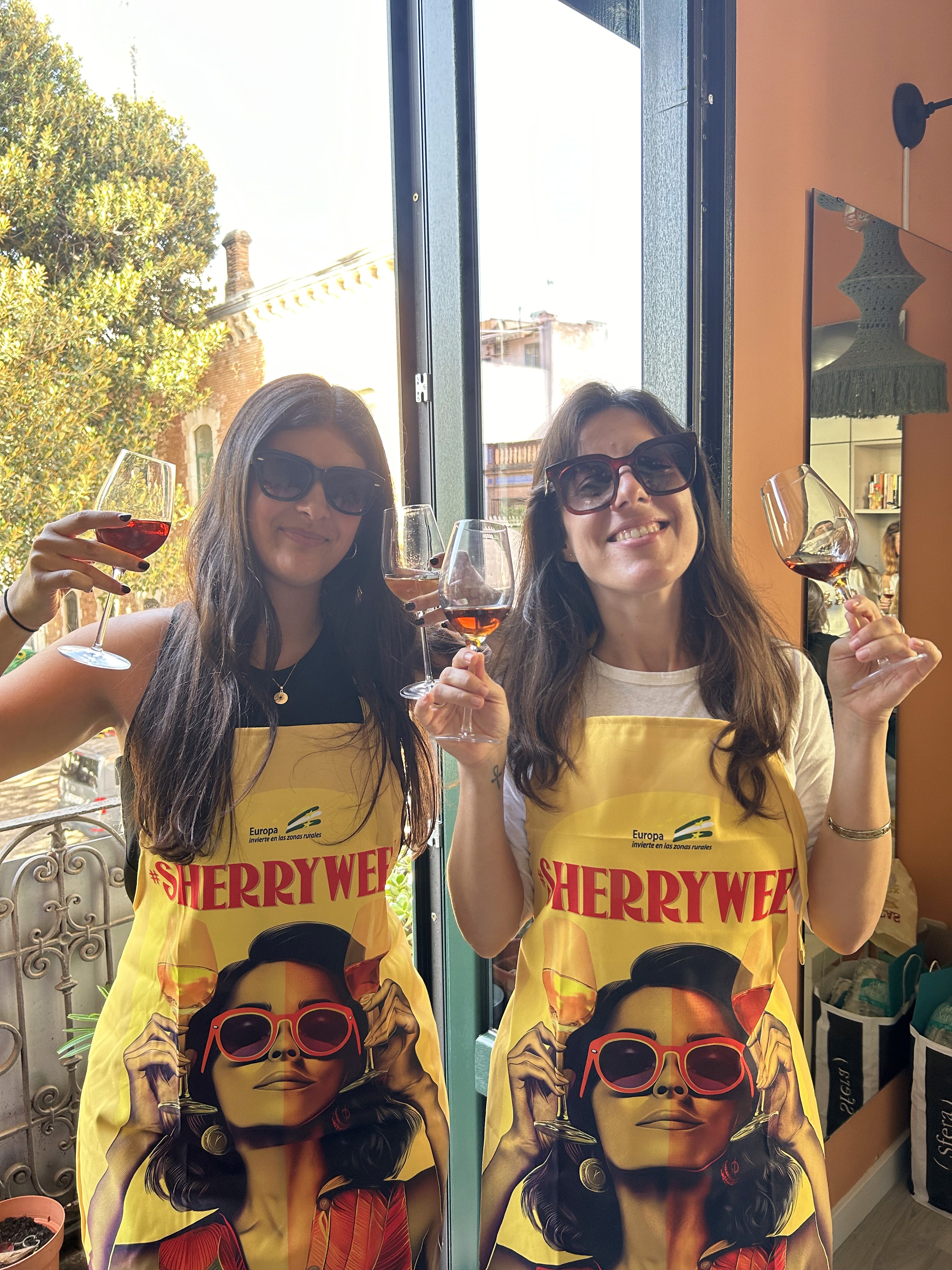
The Sherry Girl effect went one step further when people started imitating her. Her two-copa 'Sherry Stance' has been recreated around the world and posted back to us on social media, turning a piece of campaign artwork into user-generated content.
That's the moment creative work stops being something a brand broadcasts and becomes something its audience plays with. And you can't force that. You can give people the tools, the inspiration and the freedom to participate, but you can't dictate what catches on.
Technology has made it easier than ever to produce content. We now use AI as part of our creative process, but I feel strongly that making more content isn't the same as making better content. New tools should give creative people more possibilities; they shouldn't replace the taste, judgement and imagination that make somebody stop scrolling, share something or stick it on their wall.
3. Let the audience take over
The Sherry Girl effect went one step further when people started imitating her. Her two-copa 'Sherry Stance' has been recreated around the world and posted back to us on social media, turning a piece of campaign artwork into user-generated content.
That's the moment creative work stops being something a brand broadcasts and becomes something its audience plays with. And you can't force that. You can give people the tools, the inspiration and the freedom to participate, but you can't dictate what catches on.
Technology has made it easier than ever to produce content. We now use AI as part of our creative process, but I feel strongly that making more content isn't the same as making better content. New tools should give creative people more possibilities; they shouldn't replace the taste, judgement and imagination that make somebody stop scrolling, share something or stick it on their wall.
3. Let the audience take over
The Sherry Girl effect went one step further when people started imitating her. Her two-copa 'Sherry Stance' has been recreated around the world and posted back to us on social media, turning a piece of campaign artwork into user-generated content.
That's the moment creative work stops being something a brand broadcasts and becomes something its audience plays with. And you can't force that. You can give people the tools, the inspiration and the freedom to participate, but you can't dictate what catches on.
Technology has made it easier than ever to produce content. We now use AI as part of our creative process, but I feel strongly that making more content isn't the same as making better content. New tools should give creative people more possibilities; they shouldn't replace the taste, judgement and imagination that make somebody stop scrolling, share something or stick it on their wall.
4. Follow the behaviour
The fourth lesson is less glamorous, but probably the reason the first three still work: look at what people actually do. Every year, we interrogate the data and challenge our assumptions. Search terms, downloads, event formats, cities gaining momentum, content people share without being asked and where visitors drop off on the website. Those behaviours tell us far more than a headline reach figure ever could.
When we saw people naturally grouping activities within cities, we developed Sherry Rutas, giving venues collective visibility and turning individual events into something bigger. When people began recreating Sherry Girl, we encouraged it rather than trying to control it. And when the data reveals friction in registering an event or finding something on the website, that's a problem to solve before the next edition.
This is what we mean at Chelsea Co. when we talk about Insights & Imagination.
I've never been particularly interested in data for data's sake. Data should make the creative work better. Without imagination, data can lead you towards extremely sensible and extremely forgettable marketing. Without insight, creativity can produce beautiful ideas with absolutely no connection to how people behave.
Combining the two is where things get interesting.
4. Follow the behaviour
The fourth lesson is less glamorous, but probably the reason the first three still work: look at what people actually do. Every year, we interrogate the data and challenge our assumptions. Search terms, downloads, event formats, cities gaining momentum, content people share without being asked and where visitors drop off on the website. Those behaviours tell us far more than a headline reach figure ever could.
When we saw people naturally grouping activities within cities, we developed Sherry Rutas, giving venues collective visibility and turning individual events into something bigger. When people began recreating Sherry Girl, we encouraged it rather than trying to control it. And when the data reveals friction in registering an event or finding something on the website, that's a problem to solve before the next edition.
This is what we mean at Chelsea Co. when we talk about Insights & Imagination.
I've never been particularly interested in data for data's sake. Data should make the creative work better. Without imagination, data can lead you towards extremely sensible and extremely forgettable marketing. Without insight, creativity can produce beautiful ideas with absolutely no connection to how people behave.
Combining the two is where things get interesting.
4. Follow the behaviour
The fourth lesson is less glamorous, but probably the reason the first three still work: look at what people actually do. Every year, we interrogate the data and challenge our assumptions. Search terms, downloads, event formats, cities gaining momentum, content people share without being asked and where visitors drop off on the website. Those behaviours tell us far more than a headline reach figure ever could.
When we saw people naturally grouping activities within cities, we developed Sherry Rutas, giving venues collective visibility and turning individual events into something bigger. When people began recreating Sherry Girl, we encouraged it rather than trying to control it. And when the data reveals friction in registering an event or finding something on the website, that's a problem to solve before the next edition.
This is what we mean at Chelsea Co. when we talk about Insights & Imagination.
I've never been particularly interested in data for data's sake. Data should make the creative work better. Without imagination, data can lead you towards extremely sensible and extremely forgettable marketing. Without insight, creativity can produce beautiful ideas with absolutely no connection to how people behave.
Combining the two is where things get interesting.
5. Never consider it finished
Perhaps the biggest reason Sherry Week has survived for 13 editions is simple: we have never considered it finished.
There are now countless wine days and spirits celebrations around the world, including some excellent examples of brands building cultural moments around their categories. But creating thousands of independently organised physical experiences in more than 25 countries, while connecting them through one digital ecosystem and making people feel that their little tasting, dinner or masterclass is part of something happening simultaneously around the world, is incredibly difficult to sustain.
That's the bit I'm proudest of. Of course I'm proud that we created International Sherry Week. But I'm even prouder that, 13 editions later, people still want to be involved. Keeping a campaign alive doesn't mean protecting it from change. It means knowing what makes it worth keeping, and having the curiosity to question everything else.
Because the real test of a good marketing idea isn't whether people pay attention the first time. It's whether they still care 13 years later.
5. Never consider it finished
Perhaps the biggest reason Sherry Week has survived for 13 editions is simple: we have never considered it finished.
There are now countless wine days and spirits celebrations around the world, including some excellent examples of brands building cultural moments around their categories. But creating thousands of independently organised physical experiences in more than 25 countries, while connecting them through one digital ecosystem and making people feel that their little tasting, dinner or masterclass is part of something happening simultaneously around the world, is incredibly difficult to sustain.
That's the bit I'm proudest of. Of course I'm proud that we created International Sherry Week. But I'm even prouder that, 13 editions later, people still want to be involved. Keeping a campaign alive doesn't mean protecting it from change. It means knowing what makes it worth keeping, and having the curiosity to question everything else.
Because the real test of a good marketing idea isn't whether people pay attention the first time. It's whether they still care 13 years later.
5. Never consider it finished
Perhaps the biggest reason Sherry Week has survived for 13 editions is simple: we have never considered it finished.
There are now countless wine days and spirits celebrations around the world, including some excellent examples of brands building cultural moments around their categories. But creating thousands of independently organised physical experiences in more than 25 countries, while connecting them through one digital ecosystem and making people feel that their little tasting, dinner or masterclass is part of something happening simultaneously around the world, is incredibly difficult to sustain.
That's the bit I'm proudest of. Of course I'm proud that we created International Sherry Week. But I'm even prouder that, 13 editions later, people still want to be involved. Keeping a campaign alive doesn't mean protecting it from change. It means knowing what makes it worth keeping, and having the curiosity to question everything else.
Because the real test of a good marketing idea isn't whether people pay attention the first time. It's whether they still care 13 years later.
Is your event on the #SherryWeek map?
Since its launch in 2014, Sherry Week has hosted more than 35,000 events worldwide under the auspices of the Consejo Regulador for Jerez-Xérès-Sherry and Manzanilla. Nearly one million wine lovers – from seasoned professionals to curious first-timers – have discovered Sherry’s heritage, its distinctive solera system and its versatility in cocktails and food pairings.
Whether you are a Michelin-starred restaurant, neighbourhood wine shop, educator or winery, you can register your tastings, pop-ups and masterclasses at sherryweek.wine.
Is your event on the #SherryWeek map?
Since its launch in 2014, Sherry Week has hosted more than 35,000 events worldwide under the auspices of the Consejo Regulador for Jerez-Xérès-Sherry and Manzanilla. Nearly one million wine lovers – from seasoned professionals to curious first-timers – have discovered Sherry’s heritage, its distinctive solera system and its versatility in cocktails and food pairings.
Whether you are a Michelin-starred restaurant, neighbourhood wine shop, educator or winery, you can register your tastings, pop-ups and masterclasses at sherryweek.wine.
Is your event on the #SherryWeek map?
Since its launch in 2014, Sherry Week has hosted more than 35,000 events worldwide under the auspices of the Consejo Regulador for Jerez-Xérès-Sherry and Manzanilla. Nearly one million wine lovers – from seasoned professionals to curious first-timers – have discovered Sherry’s heritage, its distinctive solera system and its versatility in cocktails and food pairings.
Whether you are a Michelin-starred restaurant, neighbourhood wine shop, educator or winery, you can register your tastings, pop-ups and masterclasses at sherryweek.wine.
Share this article



Related news

Sep 17, 2026
Why chasing digital trends is the wrong strategy
Sep 17, 2026
Why chasing digital trends is the wrong strategy

Jul 10, 2026
Why the smartest drinks brands are preparing for AI now
Jul 10, 2026
Why the smartest drinks brands are preparing for AI now

May 25, 2026
The Chelsea Club: a riff on a classic that’s sharp and spicy
May 25, 2026
The Chelsea Club: a riff on a classic that’s sharp and spicy